Varanasi’s Rich Cultural Heritage from Gujarat , Picture this: You’re standing on Dashashwamedh Ghat as the sun rises, watching priests perform ancient rituals that have remained unchanged for thousands of years. The chants echo across the Ganges, smoke from the aarti rises into the morning mist, and you realize you’re witnessing something timeless. For a traveler from Gujarat—a state equally rich in heritage but expressing it so differently—Varanasi presents both familiarity and profound difference.
Gujarat and Varanasi are both ancient centers of Indian civilization, yet they couldn’t be more different in their cultural expression. Gujarat showcases organized heritage—pristine temples with marble floors, structured festivals, preserved stepwells, and museums that carefully catalog the past. Varanasi, on the other hand, is living heritage—chaotic, unpolished, refusing to be museumified, insisting that culture isn’t something preserved behind glass but lived in every narrow lane and on every ghat step.
This article explores Varanasi’s cultural tapestry through the lens of a Gujarati traveler. We’ll discover what makes this city unique, how it compares to Gujarat’s heritage, and most importantly, what we can learn from understanding a culture that has remained stubbornly, beautifully unchanged despite millennia of invasions, modernization, and globalization.
Understanding Cultural Heritage: Gujarat vs Varanasi
What Defines Cultural Heritage?
Cultural heritage isn’t just old buildings and artifacts—it’s the living practices, beliefs, arts, and traditions passed down through generations. It’s the stories grandmothers tell, the songs sung during festivals, the way communities worship, cook, celebrate, and mourn. It’s language, literature, architecture, music, dance, crafts, and the collective memory of a people.
Both Gujarat and Varanasi possess extraordinarily rich cultural heritage, shaped by thousands of years of continuous civilization. But their approaches to this heritage differ fundamentally. Understanding this difference helps Gujarati travelers appreciate Varanasi more deeply rather than judging it by familiar standards.
Gujarat’s Organized Heritage vs Varanasi’s Living Chaos
Gujarat presents its heritage with trademark Gujarati efficiency. The stepwells are restored and ticketed. The temples are clean, with organized darshan lines. Museums categorize artifacts by period. Festivals follow planned schedules. Everything is accessible, photographable, and Instagram-ready.
Varanasi refuses such organization. The temples are crowded and chaotic. The ghats are both sacred spaces and public utilities—simultaneously hosting prayers, laundry, bathing, and cremations. Heritage here isn’t packaged for tourists; it’s lived by residents who couldn’t care less whether you understand or appreciate it. This can frustrate Gujarati visitors initially—”Why is everything so disorganized?”—but therein lies Varanasi’s authentic power.
The comparison isn’t about superiority but about different philosophies. Gujarat’s approach makes heritage accessible and preserved. Varanasi’s approach keeps heritage alive and evolving. Both matter. Both teach different lessons.
The Philosophical Foundation of Varanasi
Kashi: The City of Light
Varanasi’s most ancient name, “Kashi,” means “the luminous one” or “city of light.” This isn’t just poetic branding—it reflects deep philosophical concepts. Kashi is believed to exist beyond normal space and time, somehow remaining while the rest of the universe dissolves and recreates itself through cosmic cycles.
For Gujarati travelers familiar with sacred geography through Dwarka (one of the four dhams) or Palitana (the Jain tirtha), Kashi represents something even more fundamental. It’s not just a pilgrimage site—it’s the axis mundi, the cosmic center where the material and spiritual worlds intersect.
Hindu philosophy teaches that Kashi sits on Shiva’s trident, permanently elevated above the mundane world. When the world dissolves at the end of the cosmic cycle, Kashi remains, protected by Shiva himself. Understanding this belief helps explain why the city feels different—its residents genuinely believe they live in a space that transcends ordinary geography.
Death as Liberation—A Concept Foreign to Gujarat
Here’s where Varanasi’s culture becomes most alien to Gujarati sensibilities. Varanasi celebrates death. Not in a morbid way, but as the ultimate liberation. The concept of “Kashi Labh” (the benefit of Kashi) means dying here grants moksha—liberation from the cycle of rebirth.
Gujarat’s culture, whether Hindu or Jain, certainly acknowledges death’s inevitability and discusses moksha theoretically. But it doesn’t celebrate death the way Varanasi does. Gujarati families conduct funeral rites privately and move on. In Varanasi, cremations happen publicly at Manikarnika Ghat 24/7, viewed as auspicious events rather than somber occasions.
This open acceptance—even embrace—of death as part of life’s sacred cycle forms the philosophical bedrock of Varanasi’s culture. Every tradition, every ritual, every cultural practice here ultimately connects back to this central idea: death in Kashi is the highest achievement.
How Gujaratis Can Approach This Philosophy
For Gujarati visitors, especially those uncomfortable with death, this requires mental preparation. Viewing cremations isn’t mandatory, but understanding this philosophy enhances every other cultural experience. The intense devotion, the constant rituals, the sadhus meditating in cremation grounds—all make sense when you understand that Varanasi exists primarily as a portal to liberation.
Approach it not with your own culture’s lens but with openness. You don’t have to adopt these beliefs, but respecting them unlocks deeper cultural understanding.
The Ganga: More Than Just a River
Understanding the Spiritual Significance
For Gujaratis, rivers like Narmada and Sabarmati hold religious significance. But the Ganga in Varanasi occupies a different category entirely. It’s not just holy—it’s divine, personified as the goddess Ganga who descended from heaven to earth.
Every drop of Ganga water is believed to purify sins. Bathing in it, drinking it, dying by it—all hold spiritual power. This isn’t folklore; it’s lived belief. You’ll see people collecting Ganga water in bottles to take home, the way Gujaratis might carry tulsi leaves or sacred ash from temples.
The cultural practices around the Ganga—the daily bathing rituals, the evening aartis, the cremation rites—all stem from this deep belief in the river’s divinity. For a culture that treats water sources practically (as Gujarat must, given its water scarcity), this wholesale sacralization of a river provides fascinating cultural contrast.
The Ganga Aarti Experience
The evening Ganga Aarti at Dashashwamedh Ghat is Varanasi’s most famous ritual, but it’s not mere spectacle—it’s living worship tradition dating back centuries. Seven priests perform synchronized movements with massive fire lamps, offering light to the divine river while chanting Sanskrit mantras.
For Gujaratis familiar with temple aartis—usually smaller, indoor affairs—this outdoor, theatrical, communal worship feels grand yet still authentic. The aarti draws hundreds daily, from devout locals to curious tourists, all participating in a tradition that predates most modern nations.
The cultural significance lies in its constancy. Empires rose and fell, India was colonized and freed, technology revolutionized life—and through it all, the Ganga Aarti continued uninterrupted. That continuity of tradition is what cultural heritage actually means.
Comparing with Gujarat’s Sacred Rivers
Gujarat’s Narmada Parikrama and Sabarmati Riverfront show different relationships with sacred waters. The Narmada is highly revered, and pilgrims circumambulate it over months. The Sabarmati has been developed into an urban waterfront. Both approaches are valid, but neither replicates the Ganga’s cultural centrality in Varanasi, where literally everything—geography, economy, social structure, spiritual practice—revolves around the river.
This comparison isn’t about hierarchy but about understanding how different cultures relate to natural features based on their philosophical frameworks and historical experiences.
Architectural Heritage Through Gujarati Eyes
Temple Architecture Differences
Gujarati temple architecture—exemplified by Somnath, Akshardham Gandhinagar, or the Jain temples at Palitana—emphasizes geometric precision, intricate carvings, and pristine marble. The aesthetic is perfection: clean lines, symmetrical designs, carefully maintained structures.
Varanasi’s temples present stark contrast. They’re crowded together in narrow lanes, often seeming to grow organically rather than being planned. The architecture varies wildly—some temples are ancient and crumbling, others recently renovated, many combine multiple building styles from different eras.
The Kashi Vishwanath Temple, most sacred of all, is architecturally unremarkable compared to Gujarat’s grand temples. Its power lies not in architectural beauty but in spiritual history—the site has been sacred for over 3,500 years, destroyed and rebuilt multiple times.
For Gujarati travelers accustomed to architectural grandeur, Varanasi’s temples require a mindset shift. Here, the structure matters less than the continuous worship tradition. A small, cramped temple where priests have performed the same rituals for forty generations holds more cultural weight than newer, grander structures.
The Ghats: Varanasi’s Unique Urban Design
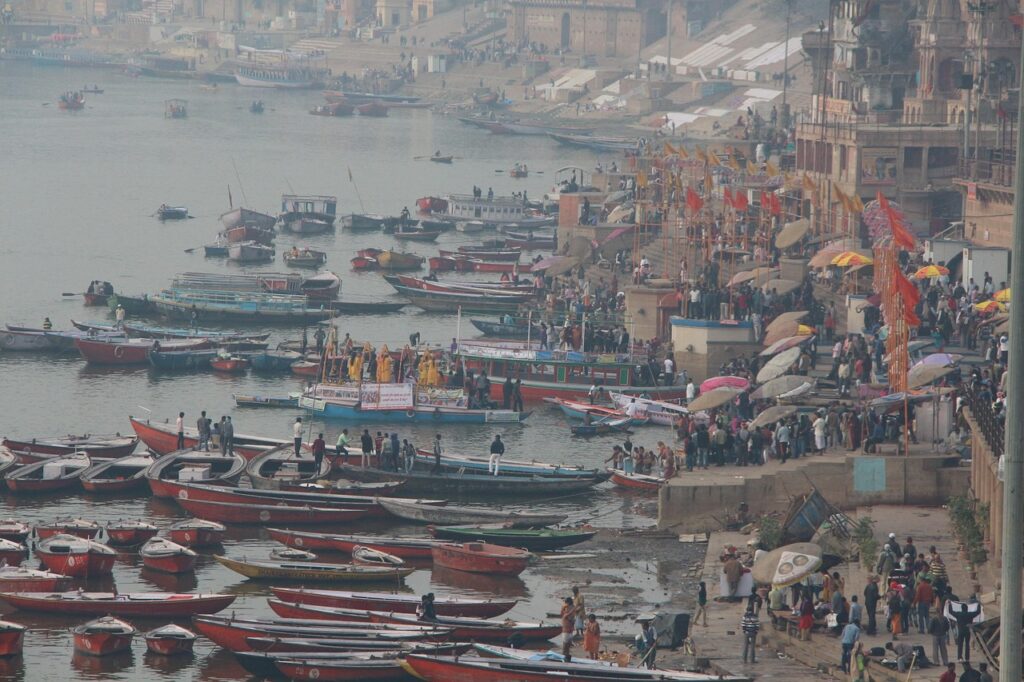
Nothing in Gujarat compares to Varanasi’s ghats—the stone steps leading down to the river. These aren’t just riverbanks; they’re the city’s cultural, social, and spiritual infrastructure. Approximately 88 ghats line the western bank of the Ganges, each with distinct character, history, and associated rituals.
Ghats serve multiple functions simultaneously: bathing platforms, cremation grounds, meditation spots, laundry areas, social gathering spaces, and performance venues. This multifunctionality—the refusal to separate sacred from mundane—is quintessentially Varanasi.
The ghat architecture itself tells cultural stories. The steps descend in measured stages, accommodating different water levels across seasons. Stone platforms (chabutra) provide seating. Ancient palaces and temples directly abut the ghats, creating integrated architecture where residence, worship, and river interface seamlessly.
Why Ghats Don’t Exist in Gujarat
Gujarat’s relationship with water has been pragmatic rather than purely spiritual, shaped by scarcity. Stepwells (vav) represent Gujarat’s genius—engineering marvels that combined water storage with aesthetic beauty. But they’re fundamentally different from ghats.
Stepwells are about accessing water that’s underground and precious. Ghats are about interfacing with an abundantly flowing, sacred river. The architectural forms reflect different climatic realities and philosophical relationships with water. Understanding this helps appreciate both forms as appropriate responses to their contexts.
The Living Traditions of Classical Arts
Classical Music Heritage
Varanasi is one of India’s most important centers for classical music, particularly Hindustani classical tradition. The city has produced legendary musicians like Bismillah Khan (shehnai), Ravi Shankar (sitar), and countless vocalists in the Benares Gharana style.
Music in Varanasi isn’t performance art—it’s spiritual practice. Morning ragas accompany sunrise on the ghats. Evening performances happen in temples as offerings to deities. The city’s numerous akharas and music schools continue guru-shishya traditions stretching back centuries.
For Gujarati travelers, this provides interesting comparison with Gujarat’s musical traditions—primarily devotional (bhajans, garba) and folk forms. While Gujarat has classical musicians, the culture doesn’t saturate daily life the way it does in Varanasi, where you might hear a tabla player practicing at dawn or stumble upon a spontaneous concert in a temple courtyard.
Dance Traditions: Kathak in Varanasi
Kathak, one of India’s eight classical dance forms, has strong Varanasi connections. The dance form’s devotional strain—telling stories of Krishna through movement—found fertile ground in Varanasi’s temple culture.
While Gujarat has its own rich dance heritage (Garba, Dandiya, and classical forms like Bharatanatyam popularized by Gujarati dancers), Kathak represents North Indian aesthetic sensibilities—more restrained, emphasizing footwork and subtle expressions rather than Garba’s exuberant energy.
Watching Kathak performances in Varanasi, often in intimate heritage house settings, reveals how dance serves as living cultural heritage, transmitting mythology, history, and values through embodied art.
Comparing with Gujarat’s Folk Traditions
Gujarat’s cultural identity connects strongly to folk traditions—Garba during Navratri, Dandiya Raas, folk songs like Bhavai and Ras. These are participatory, communal, and joyous. Varanasi’s traditions are more contemplative, spiritual, and performer-focused.
Neither is superior—they reflect different cultural values. Gujarat’s folk traditions emphasize community celebration and accessibility. Varanasi’s classical traditions emphasize mastery, lineage, and spiritual depth. Both preserve and transmit culture, just through different aesthetic philosophies.
The Weaving Legacy: Banarasi Silk
History of Banarasi Silk Weaving
Banarasi silk weaving represents one of India’s most prestigious textile traditions, with UNESCO recognition as a handicraft of excellence. The tradition dates back at least 400 years, possibly much older, brought to prominence during Mughal patronage.
What makes Banarasi silk culturally significant isn’t just its beauty but the knowledge system it represents. Master weavers carry techniques passed down through families for generations. The intricate zari (gold/silver thread) work, the brocade patterns (often inspired by Mughal art), and the silk processing require years of apprenticeship to master.
For Gujarati visitors familiar with Patola from Patan—another prestigious, time-intensive silk tradition—Banarasi silk offers interesting comparison. Both are expensive, laboriously crafted, and culturally valued. But they represent different aesthetic traditions and regional identities.
The Craft Process Explained
Visiting weaver colonies in Varanasi reveals the craft’s complexity. A single Banarasi silk saree can take 15 days to several months to complete, depending on complexity. The preparation alone—from silk thread processing to design graphing to loom setup—takes days.
The weaving happens on pit looms (where the weaver sits in a pit with feet operating lower parts). Two people often work together—one managing the main weave, another handling the zari work. The tapping sound of looms creates the weaver colonies’ soundtrack, a rhythm unchanged for centuries.
This craft represents endangered cultural heritage. Younger generations increasingly reject weaving for easier, better-paying work. Yet visiting these workshops and understanding the skill involved helps culturally aware travelers appreciate why authentic Banarasi silk commands high prices—you’re buying not just fabric but centuries of accumulated knowledge.
Gujarat’s Patola vs Banarasi Silk
Gujarat’s double ikat Patola silk from Patan represents comparable technical mastery and cultural significance. Both are expensive, time-consuming, and mark important life events (weddings primarily). But they express different regional aesthetics.
Patola uses geometric patterns and vibrant colors, reflecting Gujarat’s folk art sensibilities and perhaps Jain emphasis on precise, ordered beauty. Banarasi uses Mughal-inspired floral and paisley motifs with gold zari, reflecting North Indian courtly aesthetics and Islamic art influences.
Understanding both traditions deepens appreciation for India’s textile heritage—not as monolithic “Indian craft” but as diverse regional expressions, each with unique history, technique, and cultural meaning.
Literary and Scholarly Traditions
Varanasi as a Learning Center
Varanasi has been a center of learning for over 2,000 years, possibly longer. When European universities were just beginning, Varanasi already had established institutions teaching philosophy, astronomy, mathematics, medicine, and of course Sanskrit and religious texts.
Banaras Hindu University, established in 1916, continues this tradition as one of India’s largest residential universities. But the real scholarly heritage lives in countless smaller pathshalas (traditional schools) and gurukuls scattered through the old city, where students still learn Sanskrit, Vedic chanting, and philosophical texts through oral tradition.
For Gujarati travelers, this recalls Gujarat’s own scholarly heritage—Nalanda Gujarat’s Buddhist learning centers, the Jain manuscript preservation traditions, and modern institutions like Gujarat University. But Varanasi’s claim is its unbroken continuity—scholarship has continued here without interruption for millennia.
The Sanskrit Scholarship
Sanskrit isn’t a dead language in Varanasi—it’s spoken, studied, and lived. Pandit families still converse in Sanskrit at home. Debates (shastrarth) on philosophical texts happen regularly. New Sanskrit literature is composed here.
This living linguistic tradition represents crucial cultural heritage. Sanskrit carries Hindu philosophy’s subtleties—concepts that don’t translate well into modern languages. Preserving active Sanskrit scholarship means preserving conceptual frameworks that shaped Indian civilization.
Gujarat has its own Sanskrit scholars and traditions, particularly in centers like Vadodara. But Varanasi remains the acknowledged center, where the highest level of Sanskrit mastery is recognized and validated.
Tulsidas and the Ramcharitmanas Connection
The 16th-century poet-saint Tulsidas composed the Ramcharitmanas in Varanasi, retelling the Ramayana in Awadhi (a Hindi dialect) rather than Sanskrit, making it accessible to common people. This text became North India’s most influential religious-literary work, shaping cultural values and religious practice for millions.
The Tulsi Manas Temple in Varanasi, built where Tulsidas reportedly wrote the text, attracts Gujarati pilgrims familiar with Ramayana traditions. Gujarat has its own Ramayana performance traditions (Ramlila), but the Ramcharitmanas specifically connects North Indian devotional culture across linguistic communities.
Understanding literary heritage—how texts are composed, transmitted, performed, and embedded in daily life—reveals culture’s intellectual dimensions beyond visible arts and architecture.
Culinary Heritage: A Taste of History
The Vegetarian Paradox
Here’s something that surprises Gujaratis: Varanasi is predominantly vegetarian despite being in North India where non-vegetarian food dominates. The sacred city status and Brahmin population concentration created vegetarian culture rivaling Gujarat’s.
But the similarity ends there. The taste profiles differ dramatically. Gujarat favors sweet-savory combinations—subtle spices, jaggery in dal, sweet chutneys. Varanasi cuisine hits hard—intense spices, sour notes from tamarind, fried preparations, rich gravies.
Street food culture showcases these differences. Gujarat’s khaman-dhokla-fafda are steamed or lightly fried, emphasizing chickpea flour’s natural flavors. Varanasi’s kachori-chaat-tikki are deep-fried, drenched in chutneys, loaded with spices—maximalist flavor profiles.
This culinary difference reflects deeper cultural traits. Gujarat’s historically merchant-dominated culture valued controlled, measured approaches even in food. Varanasi’s temple-centric, indulgence-permitting culture created bold, intense flavors. Both are vegetarian, but expressing different cultural personalities through food.
Street Food as Cultural Expression
Varanasi’s street food isn’t just sustenance—it’s cultural performance, social glue, and living history. Certain shops have operated from the same spot for generations, their recipes unchanged. Knowing which shop has the best kachori becomes neighborhood identity.
The famous Banarasi paan represents this perfectly—it’s not just a digestive but a social ritual, an art form, and a historical artifact. The ingredients, the preparation technique, even the way it’s consumed follow traditions centuries old. When a Gujarati tries Banarasi paan, they’re not just tasting beetle leaf and spices—they’re experiencing cultural heritage that survived because communities valued and preserved it.
Paan Culture and Its Social Significance
Paan in Varanasi transcends the betel leaf preparation familiar across India. It’s social lubricant, post-meal tradition, and symbol of hospitality. Offering paan to guests carries significance like offering tea in Gujarat.
The paan shops themselves—some operating since the 1800s—are cultural institutions. They’re gathering spots where locals discuss philosophy, politics, and gossip. The paan-wala (vendor) often knows neighborhood histories spanning decades, making them informal cultural historians.
For Gujaratis who might find paan bitter or unfamiliar, understanding its cultural role helps appreciate why locals treat certain paan shops reverently. It’s not about the paan—it’s about the tradition, the community connection, the historical continuity it represents.
Festival Traditions and Their Cultural Roots
Dev Deepawali vs Gujarat’s Diwali
Both Gujarat and Varanasi celebrate Diwali, but Varanasi adds Dev Deepawali fifteen days later—Kartik Purnima, when gods supposedly descend to bathe in the Ganges. Every ghat is illuminated with over a million earthen lamps, creating a spectacle rivaling anything in India.
Gujarat’s Diwali emphasizes Lakshmi worship and new beginnings—fitting for a mercantile culture. Dev Deepawali emphasizes divine presence and thanksgiving—fitting for a priestly, temple-centric culture. Both are “festivals of lights,” but expressing different theological and cultural priorities.
The celebration styles differ too. Gujarat’s Diwali features organized rangoli competitions, planned fireworks displays, and community events. Dev Deepawali is more spontaneous—families light lamps on ghats, boat rides become floating meditation, and the entire riverside transforms organically rather than through organized planning.
Maha Shivaratri in Kashi
As the city of Shiva, Varanasi’s Maha Shivaratri celebrations reach unmatched intensity. Millions of pilgrims converge, creating one of India’s largest religious gatherings. The all-night worship, the continuous chanting, the processions—it’s Varanasi’s culture at maximum expression.
Gujarat celebrates Shivaratri too, with significant observances at Somnath and other Shiva temples. But Varanasi’s celebration carries different weight—here, Shivaratri isn’t just a festival but affirmation of the city’s very identity as Shiva’s abode.
For Gujarati visitors experiencing Maha Shivaratri in Varanasi, the intensity can be overwhelming—packed temples, shoulder-to-shoulder crowds, deafening chants. But this intensity is precisely the point—Varanasi doesn’t do restrained spirituality.
Ganga Mahotsav: Culture on Display
The five-day Ganga Mahotsav (usually November) showcases Varanasi’s cultural heritage through music, dance, and craft exhibitions. Unlike tourist-oriented festivals, this genuinely celebrates local culture for locals, with visitors as welcomed observers.
Classical music concerts by renowned artists, Kathak performances on ghat steps, craft bazaars featuring local weavers—it’s living heritage on public display. The festival’s setting—spread across ghats rather than confined to auditoriums—makes culture accessible and integrated with daily life.
Gujarat has similar cultural festivals—Navratri being the obvious example. But Navratri’s participatory, folk-oriented nature differs from Ganga Mahotsav’s classical, performance-focused character. Both celebrate culture but through different aesthetic frameworks.
The Sadhus and Spiritual Seekers
Understanding the Ascetic Tradition
Varanasi attracts sadhus (ascetics) from across India—orange-robed Shaivites, ash-smeared Aghoris, Naga sadhus, and countless other orders. For them, Varanasi represents the ultimate spiritual destination, where renunciation reaches its logical conclusion.
Gujarat has sadhus too, particularly in BAPS Swaminarayan and other organized traditions. But Varanasi’s sadhus are different—more radical, less institutionalized, often practicing extreme asceticism. They’re living examples of ancient spiritual traditions, choosing poverty, celibacy, and constant meditation in pursuit of liberation.
For Gujarati travelers, especially those uncomfortable with poverty or extreme practices, sadhus can seem strange or even off-putting. Understanding them as cultural heritage—preserving spiritual traditions thousands of years old—reframes the encounter from discomfort to anthropological interest.
Comparing with Gujarat’s Spiritual Landscape
Gujarat’s spiritual landscape emphasizes householder traditions—combining spiritual practice with family life and business. Even Gujarat’s prominent ascetics (like BAPS swamis) operate within organized structures serving community needs.
Varanasi’s sadhu culture represents the opposite extreme—complete renunciation, individual spiritual pursuit, rejection of social responsibilities. This reflects different cultural values: Gujarat’s pragmatic, community-oriented approach versus Varanasi’s philosophical tradition that ultimately values individual liberation above all else.
Neither is “correct”—they’re different paths, both validated by Hindu philosophy, reflecting regional cultural characteristics shaped by history and economics.
Museums and Cultural Preservation
Bharat Kala Bhavan
Located in Banaras Hindu University, Bharat Kala Bhavan houses over 100,000 artifacts spanning India’s cultural history. The museum’s strength lies in its comprehensive collections—miniature paintings, sculptures, textiles, decorative arts, archaeological findings.
For Gujarati visitors who’ve explored museums in Ahmedabad or Vadodara, Bharat Kala Bhavan offers North Indian cultural perspective. The Mughal and Rajput miniature painting collections are particularly strong, showcasing art traditions that influenced but differed from Gujarat’s artistic heritage.
Museums like this perform crucial cultural preservation—documenting, studying, and displaying heritage that might otherwise be lost. They transform culture from lived experience (fragile, constantly changing) into historical record (stable, studied, understood).
Ramnagar Fort Museum
The Ramnagar Fort Museum, housed in the still-occupied royal palace, presents a different preservation approach—heritage within functional context. The Maharaja’s family still lives here, and the museum displays their ancestral possessions: vintage cars, royal costumes, weaponry, manuscripts.
This “living museum” concept—where heritage isn’t separated from daily life—represents Varanasi’s overall approach to culture. History isn’t past here; it’s continuous present. The fort hosts the annual Ramlila performance, connecting 400-year-old traditions with contemporary practice.
For Gujaratis familiar with preserved palaces like Laxmi Vilas in Vadodara, Ramnagar offers a less polished but more authentic glimpse of royal heritage integrated with ongoing life.
Modern Cultural Challenges and Preservation Efforts
Varanasi faces significant cultural heritage challenges. Urbanization pressure threatens the old city’s character. Younger generations migrate away, leaving traditional crafts without successors. Pollution endangers the Ganges—the culture’s spiritual foundation. Tourism brings revenue but also commercializes sacred spaces.
Various preservation efforts address these challenges. UNESCO recognition of Banarasi silk weaving helps sustain the craft. The recent Kashi Vishwanath Corridor development improved pilgrim access while attempting to preserve surrounding heritage structures. NGOs work on Ganga cleaning and ghat maintenance.
But preservation isn’t straightforward. Should Varanasi be frozen in time or allowed to evolve? How does living culture get preserved without museumifying it? These questions lack easy answers.
For Gujarati visitors, especially those involved in heritage conservation back home, Varanasi’s challenges and responses offer valuable case studies. Gujarat faces similar tensions—preserving stepwells while cities expand, sustaining crafts in modern economy, balancing tourism with authenticity.
Cultural Etiquette for Gujarati Visitors
Understanding culture requires behaving respectfully within it:
At Ghats:
- Remove shoes before stepping onto ghat platforms
- Ask permission before photographing people, especially during religious activities
- Dress modestly (covered shoulders and knees)
- Don’t point feet toward the river or deities
- Avoid loud conversations during prayers
At Temples:
- No leather items inside temple premises
- Photography rules vary—ask before clicking
- Don’t touch deities or offerings unless invited
- Maintain appropriate distance from ongoing rituals
- Donations are optional but appreciated
Cultural Sensitivity:
- Cremation ghats aren’t tourist attractions—observe quietly from distance if at all
- Sadhus aren’t photo props—ask respectfully if photographing
- Street performers and musicians—tip if you stop to watch/listen
- Guides and priests—agree on fees upfront to avoid misunderstandings
General Behavior:
- The intense crowding and chaos isn’t disrespect—it’s how Varanasi functions
- Aggressive vendors are culturally normal here—firm but polite refusal works
- Cleanliness standards differ from Gujarat—manage expectations
- Bargaining is expected in markets but not in temples or for basic services
How Gujarat and Varanasi Cultures Complement Each Other
Rather than viewing these cultures as incompatible, recognize their complementary nature:
Gujarat teaches practical preservation—stepwells meticulously restored, temples well-maintained, crafts commercialized for survival, festivals organized efficiently. This approach saves heritage from destruction and makes it accessible.
Varanasi teaches authentic continuity—traditions maintained not for tourists but for themselves, culture that evolves organically while retaining essence, acceptance that heritage includes imperfection and chaos.
A Gujarati approaches heritage as something precious to protect and showcase. A Banarasi approaches heritage as something to live within, unremarkably, as part of daily existence.
Both approaches have wisdom. Gujarat shows how to keep heritage alive through changing circumstances—adapting without losing identity. Varanasi shows that some things shouldn’t be adapted—that preserving the inconvenient, the chaotic, the uncomfortable parts of culture matters as much as preserving the beautiful parts.
For thoughtful travelers, experiencing both cultures develops more nuanced understanding of what heritage means and how different communities can successfully preserve identity while addressing modernity’s challenges.
Conclusion: Bringing Cultural Understanding Back Home
Exploring Varanasi’s cultural heritage as a Gujarati traveler is ultimately about expanding your cultural vocabulary. You return home not just with photographs and souvenirs but with broadened perspective on what Indian culture encompasses—its diversity, its depth, its refusal to be simplified.
You’ve seen how different environmental conditions (Gujarat’s aridity versus the Gangetic plain’s fertility) shape cultural expressions. You’ve experienced how different philosophical emphases (Gujarat’s this-worldly pragmatism versus Varanasi’s other-worldly focus) create distinct value systems. You’ve understood how historical circumstances (Gujarat’s mercantile maritime heritage versus Varanasi’s priestly scholarly tradition) produce different cultural personalities.
Most importantly, you’ve learned that culture isn’t monolithic. There’s no single “Indian culture”—there are Indian cultures, plural, each valid, each offering insights, each preserving different aspects of our civilizational heritage.
When you return to Ahmedabad or Surat, you see your own culture with fresh eyes. Why do Gujaratisvalue cleanliness so highly? Why this emphasis on business and practical achievement? Why do festivals feel so organized? Varanasi provides the contrast that makes your own cultural characteristics visible, conscious, and appreciable.
That’s the real treasure of cultural exploration—not just learning about others but understanding yourself more deeply through that learning. Varanasi’s heritage doesn’t diminish Gujarat’s; it illuminates it, complements it, and enriches the larger tapestry of Indian civilization that we all inherit and must preserve for future generations.
FAQs
1. Why does Varanasi seem so chaotic compared to Gujarat’s organized heritage sites?
The chaos reflects different cultural philosophies. Gujarat’s heritage preservation emphasizes accessibility, organization, and showcasing—reflecting Gujarati cultural values of efficiency and commerce. Varanasi’s approach keeps heritage integrated with messy daily life, refusing separation between sacred and mundane. The chaos is intentional—Varanasi believes authentic culture can’t be sanitized or organized without losing its essence. Both approaches preserve culture, just through different methods reflecting different regional values.
2. How can vegetarian Gujaratis connect with Varanasi’s culture through food when the flavors are so different?
Focus on the cultural meanings behind food rather than just taste. Try understanding why Banarasi cuisine is intense—it reflects a culture that embraces extremes (intense devotion, open death acknowledgment, bold philosophical positions). Start with milder items like lassi and gradually try kachoris and chaats. Recognize that both Gujarati and Banarasi cuisines express vegetarianism through their regional cultural lenses—neither is “correct,” both are valid expressions of vegetarian tradition.
3. Is it necessary to understand Hindu philosophy to appreciate Varanasi’s cultural heritage?
Basic understanding definitely enhances appreciation, but you don’t need deep philosophical knowledge. Understanding core concepts—moksha (liberation), karma (action/consequence), reincarnation, and why death in Kashi is considered auspicious—provides sufficient framework. Many Gujarati travelers have this background from their own traditions. Approach Varanasi’s philosophy as cultural heritage (how people here understand life/death/meaning) rather than as truth claims you must accept or reject.
4. How do Varanasi’s classical arts compare with Gujarat’s folk traditions in terms of cultural value?
They’re different, not hierarchical. Classical arts (Hindustani music, Kathak) require years of training, emphasize technical mastery, and carry centuries of guru-shishya lineage. Folk arts (Garba, Bhavai) are accessible, participatory, and community-building. Both preserve culture—classical arts preserve complex knowledge systems and aesthetic traditions, while folk arts preserve community cohesion and shared identity. Varanasi specializes in the former, Gujarat in the latter, reflecting different cultural priorities.
5. Can modern Gujarati youth connect with Varanasi’s ancient heritage, or is it only meaningful for older generations?
Varanasi offers different connections for different ages. Older Gujaratis might connect through spiritual and philosophical dimensions. Younger travelers can appreciate Varanasi’s vibrant street food scene, music heritage (connecting to modern indie music’s roots), craft traditions (textile design inspiration), photography opportunities, and as an alternative to commercialized tourism. The city’s coffee shops and hostels in Assi area attract young travelers worldwide. Heritage isn’t just about the ancient—it’s about understanding how past continues shaping present, which matters at every age.